Westie Grooming: Hand-Stripping, Pet Clips and Coat Care
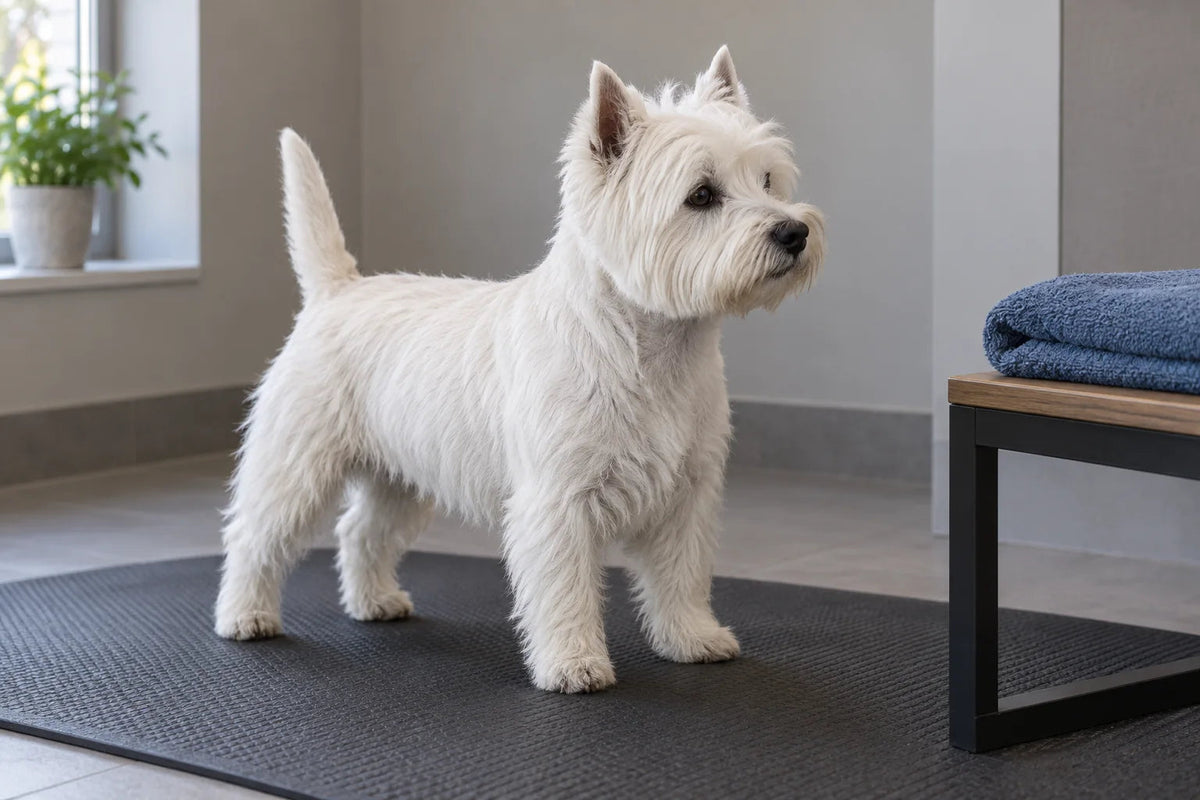
A Westie's white coat makes dirt easy to spot, but colour is not the most important grooming decision. Texture comes first. A harsh jacket maintained by hand-stripping and a practical clipped pet coat need different expectations.
Choose the approach with an experienced groomer, then make the everyday routine about comfortable brushing, clean furnishings and a face the dog can use freely.
Choose the coat plan before the haircut. Hand-stripping and clipping are different methods. A good pet groom respects the individual coat and the dog's comfort.
Why texture matters
The AKC Westie profile identifies hand-stripping as the traditional approach while noting that pet owners often choose clipping for neatness. Neither description tells you automatically what suits your dog's current coat.
The West Highland White Terrier Club's grooming guidance explains that not every coat can be comfortably hand-stripped. Softer or differently textured coats need individual assessment.
Hand-stripping removes selected mature hairs; clipping shortens them. A clipped coat can look and feel different from a stripped jacket. Discuss that trade-off rather than expecting two different methods to produce an identical result.
Give a useful brief at the appointment
- Explain how often you can brush at home.
- Point out the areas that repeatedly collect dirt or tangle.
- Ask whether the coat is suitable for comfortable hand-stripping.
- If choosing clipping, agree the practical length and furnishings.
- Ask for the eyes and mouth to remain clear without an exaggerated head shape.
- Request a demonstration of the checks you should do between visits.
A pet does not need to meet a show presentation timetable. Comfort and manageable maintenance matter more than preserving a particular silhouette.
Do not attempt to strip firmly attached hair because a schedule says it is time. Learning the technique and judging coat readiness require experienced guidance.
Brush the places that need it
Use a suitable brush gently through the body and longer furnishings. Check behind the ears, under the front legs, around harness straps and inside the hind legs. Separate small sections instead of dragging through the entire skirt of hair.
A VUNRO coarse-and-fine comb can check smaller areas after brushing. Start with wider teeth and stop if they catch. Finer teeth are for clear hair, not for forcing apart a knot.
Support loose tangles while working gently from the ends. Tight mats against the skin need professional help. Do not slide scissors underneath them, particularly in armpits or around the face.
Clean white hair without chasing an artificial white
After meals, check the beard for residue and gently clean and dry it. After walks, inspect the feet and lower furnishings. Local cleaning often deals with the problem more easily than a whole bath.
Do not bleach the coat, apply household stain removers or put strong products near the eyes and mouth. Persistent staining accompanied by soreness, smell or discharge needs assessment rather than cosmetic cover-up.
The Westie Club's practical grooming advice recommends patient, gentle handling, appropriate tools and a regular routine. Those fundamentals matter more than achieving a brilliant white finish in every photograph.
Plan baths around the chosen coat routine
Ask your groomer how washing should fit around hand-stripping or clipping appointments. For an ordinary bath, first check tangles, then use a non-slip surface, comfortable water and dog shampoo according to the label.
Rinse through the legs, belly and furnishings thoroughly. Press dry with towels rather than rubbing long hair into new knots. If using a dog dryer, keep the setting comfortable, airflow moving and the session supervised.
Check at the roots before deciding the dog is dry. Clean and dry the harness and bedding too. A freshly washed dog should not go straight back into damp gritty equipment.
If you maintain an agreed pet clip at home
Have your groomer demonstrate the body technique and select a suitable length. The coat must be clean, fully dry and free of pulling tangles before a guarded clipper pass.
The VUNRO D-Series clipper uses its own D-Series blades. The Universal Guard Comb Set works with appropriate A5 and D-Series blade setups; confirm the correct combination before use. Clippers shorten hair and do not perform hand-stripping.
Do not force a guard through resistance. Stop if the dog becomes uncomfortable or the blade is hot, and leave delicate face, pad and sanitary work to someone with suitable experience.
Keep feet part of the routine
Check nails regularly, including dewclaws. The VUNRO nail grinder can smooth small amounts gradually when the dog accepts it. Keep hair away from the rotating head, pause often and stay clear of the quick. Ask for a demonstration if uncertain.
A successful Westie groom is comfortable and repeatable, with a coat plan you understand and furnishings you can maintain between appointments.
Keep learning
More from the Blade Blog
Whippet Grooming: Gentle Coat Care and Comfortable Nails
Read the guide →
Chihuahua Grooming: Smooth Coats, Long Coats and Tiny Paws
Read the guide →